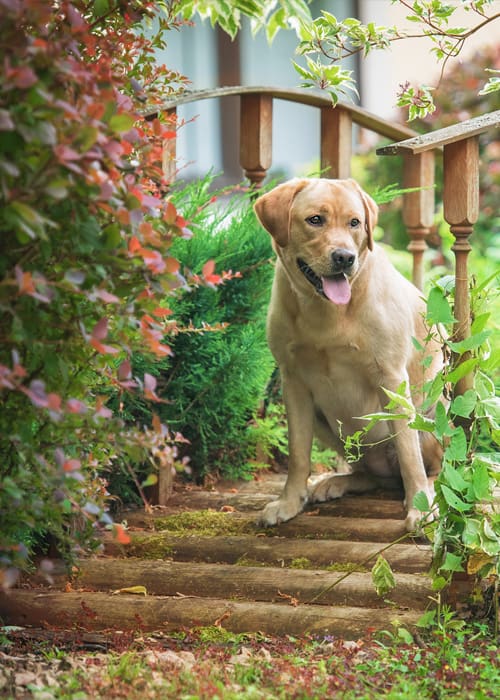
How to create a safe, beautiful outdoor space for you and your pets.
A garden should be somewhere the whole family can enjoy — and for most of us, that includes four-legged members too. With around 12 million dogs living in UK households (alongside millions of cats), it’s worth thinking carefully about how your outdoor space works for pets as well as people. The good news is that a pet-friendly garden doesn’t have to mean sacrificing style. With the right planting, materials and layout, you can design a garden that’s safe, robust and genuinely beautiful.
Here’s our guide to getting it right.
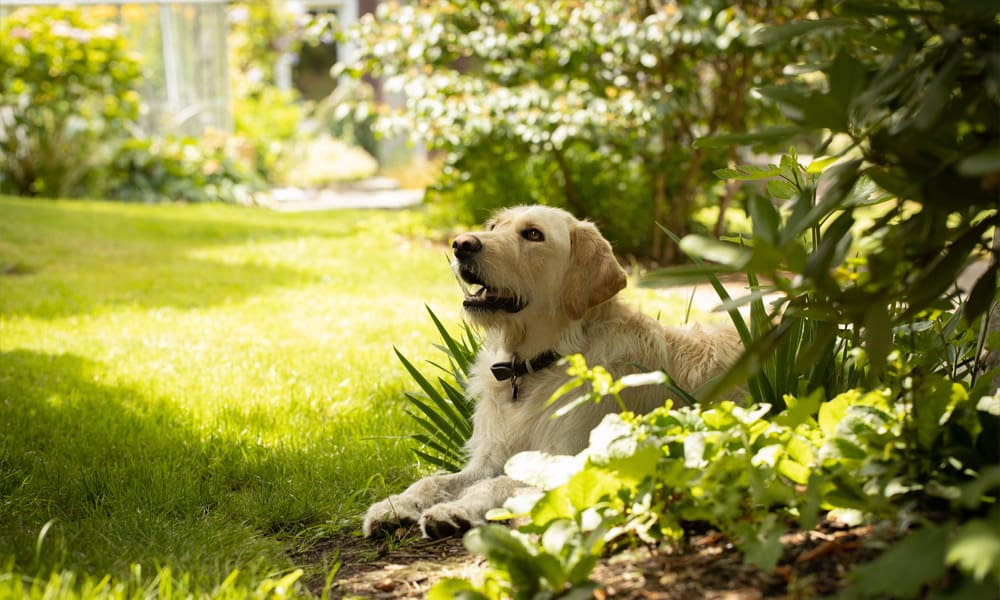
The single most important step in any pet-friendly garden is choosing plants that won’t cause harm if nibbled, brushed against, or rolled in. Over 50 common UK garden plants are toxic to dogs, including Foxgloves, Lilies, and Yew, so it pays to check before you plant — even old favourites can catch owners out.
Reliable pet-safe choices for UK gardens include:
Camellias – non-toxic, evergreen, and excellent for shade and shelter Roses – generally safe, though best positioned away from paths pets brush past regularly Sunflowers, Calendula (pot marigold), and Snapdragons – bright, cheerful, and non-toxic Herbs – Rosemary, Thyme, Basil, and lemon balm are safe and double as sensory enrichment, since dogs love to explore scent, Festuca, ornamental grasses and Carex, grass-like sedges offer movement and texture pets can move through without harm. Hardy shrubs – Astilbes, Buddleia, Fuchsias, and Magnolias bring seasonal colour with peace of mind.
Plants to avoid or fence off include Lilies, Azaleas, Oleander, and Foxgloves, all of which are toxic to cats and dogs, if ingested. If you’re ever uncertain about a specific plant, it’s always worth checking with your vet or a trusted plant safety resource before adding it to a bed your pet can reach.
Dogs in particular need space to run, dig, and explore — and gardens that don’t account for this often end up with worn lawns and damaged borders.
Rather than fighting it, design for it:
Perimeter Paths
Many dogs instinctively patrol the edges of a garden. Leaving a clear, durable path (bark chip, gravel, or resilient grass) along boundaries works with this instinct rather than against it, protecting your borders in the process.
Digging Zones
A designated sandpit or loose-soil patch gives dogs an approved outlet for digging, saving your flower beds.
Robust Planting
Sedges, shorter ornamental grasses, Catmint, and Lavender are tough enough to withstand regular activity and bounce back from being brushed past.
Raised Beds
Lifting borders and vegetable patches off ground level helps deter digging and keeps delicate planting out of paw's reach.
Hard landscaping matters just as much as planting. Surfaces should be comfortable underfoot, easy to clean, and safe in all weather:
Avoid surfaces that hold heat excessively in summer (dark stone or decking can become uncomfortably hot for paws) and check that any resin, gravel, or aggregate products are non-toxic if licked or chewed.
Install a rill, or shallow water feature with running water, for pets to drink from or splash around in.
A beautiful garden is only pet-friendly if it’s also secure. Fencing should be:
Where a fully enclosed boundary isn’t practical, low internal hurdles or trellis screens can protect vulnerable areas — vegetable patches, seedlings, or new planting — while your dog learns which zones are off-limits.
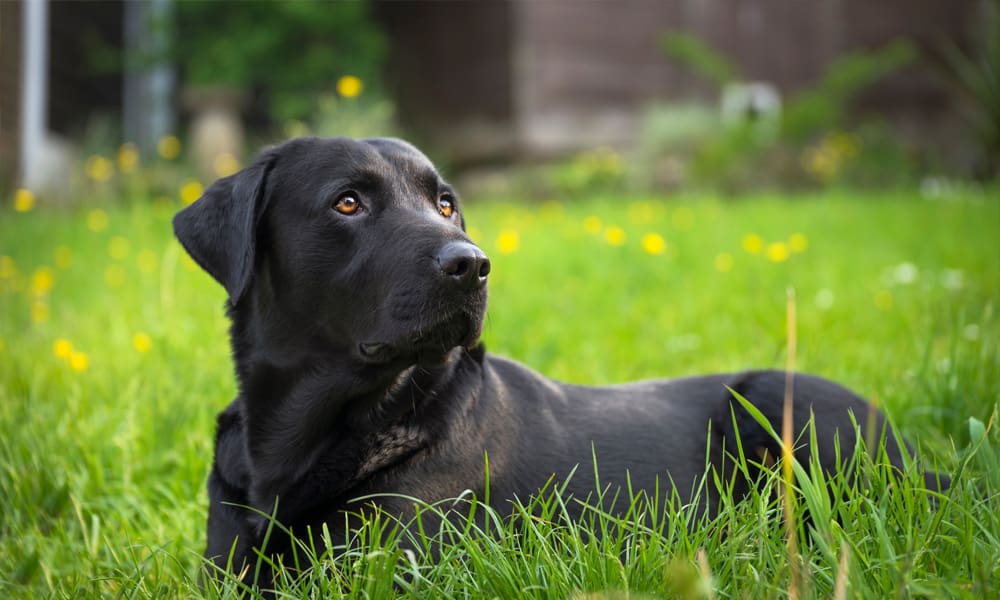
Pets need respite from the sun just as much as people do. Larger shrubs and trees such as Camellias, Field Maple, and Hawthorn create natural shaded resting and hiding spots, while a well-placed pergola or covered seating area gives dogs and cats alike somewhere cool to retreat to during warmer months.
Gardens aren’t just functional spaces for pets — they’re places of exploration. Aromatic herbs like Rosemary and Lemon balm encourage dogs to sniff and investigate, while safe hiding spots among robust planting can turn a garden into an engaging environment rather than simply a place to toilet and pass through. Scattering treats or toys among pet-safe planting is a simple way to combine enrichment with garden use.
A well-designed pet-friendly garden benefits everyone: safer planting reduces the risk of accidental poisoning, robust surfacing and zoning protect your investment in the garden’s design, and thoughtful shade and enrichment features keep pets healthier and happier outdoors.
If you’re planning a new garden or renovating an existing one with pets in mind, it’s worth bringing in the expertise of a professional landscaping team who can balance safety, durability, and design from the outset — creating a garden that looks every bit as good as it functions.
Get in touch with our team to discuss how we can help create a safe, beautiful outdoor space for your whole family.
Book a free, no-obligation site visit and quote with our landscaping team.