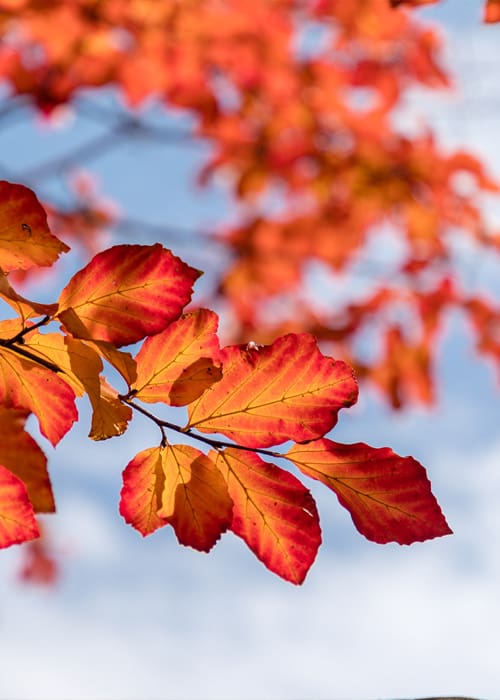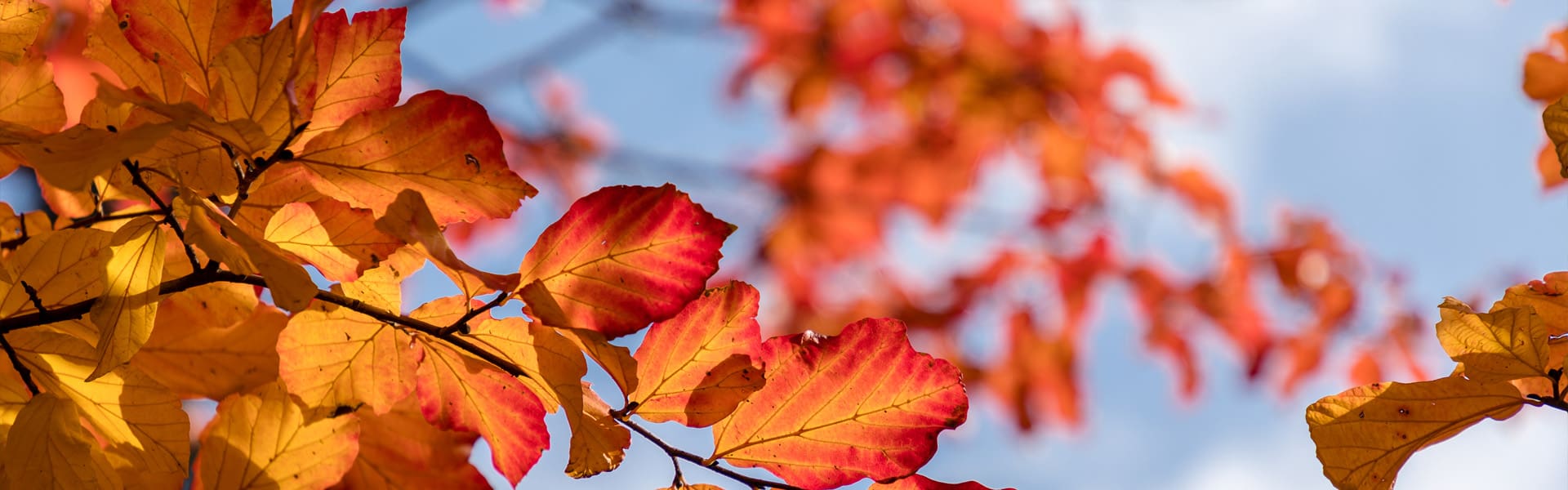
There’s a particular kind of magic that settles over a garden in October, when the palette shifts from summer green to a blaze of amber, crimson and gold.
Choosing the right tree for autumn colour isn’t just about picking something pretty for a few weeks of the year — it’s about selecting a specimen that earns its place across all four seasons, then rewards you with a spectacular final act before winter.
Below, we’ve drawn on years of planting experience across gardens and estates throughout the UK to bring you the trees that consistently deliver the best autumn displays, along with the growing conditions they need to thrive.
Autumn colour is triggered by a drop in temperature and shortening daylight, which causes trees to stop producing chlorophyll (the pigment that makes leaves green). As chlorophyll fades, underlying pigments — carotenoids (yellows and oranges) and anthocyanins (reds and purples) — are revealed. The intensity of the display depends on weather: a run of warm, sunny days followed by cool, crisp nights tends to produce the richest colour, which is why some autumns are more spectacular than others.
With that in mind, here are the trees worth planting if you want a reliably strong show.
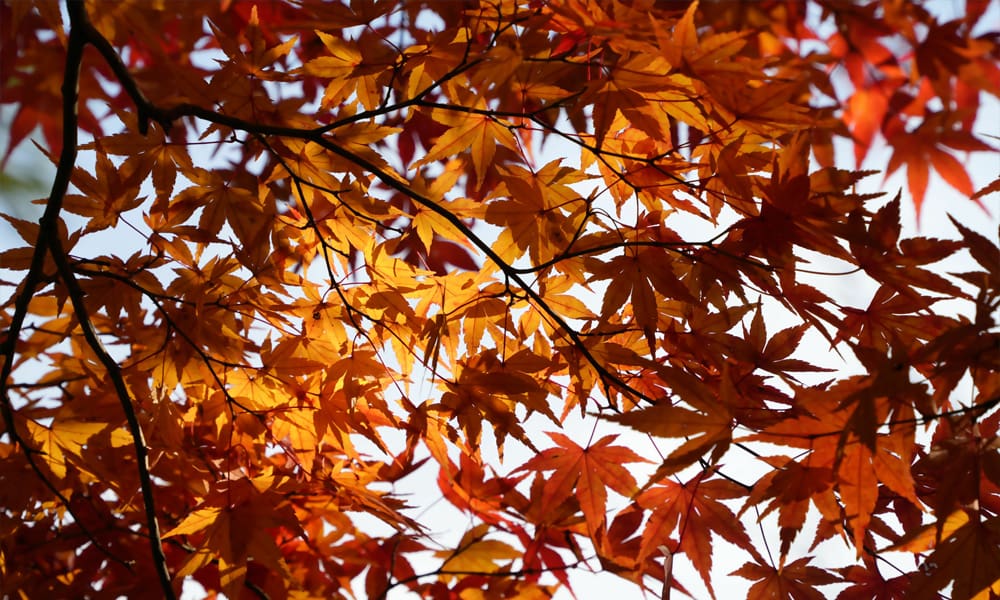
Acer palmatum
No list of autumn trees is complete without the Japanese maple. Compact, elegant and endlessly varied, cultivars such as ‘Osakazuki’ and ‘Sango-kaku’ turn brilliant shades of scarlet, orange and gold. They’re superb as specimen trees in smaller gardens or as focal points in a border, and many varieties tolerate container growing.
Best for: Sheltered spots with dappled shade and moist, well-drained, slightly acidic soil.
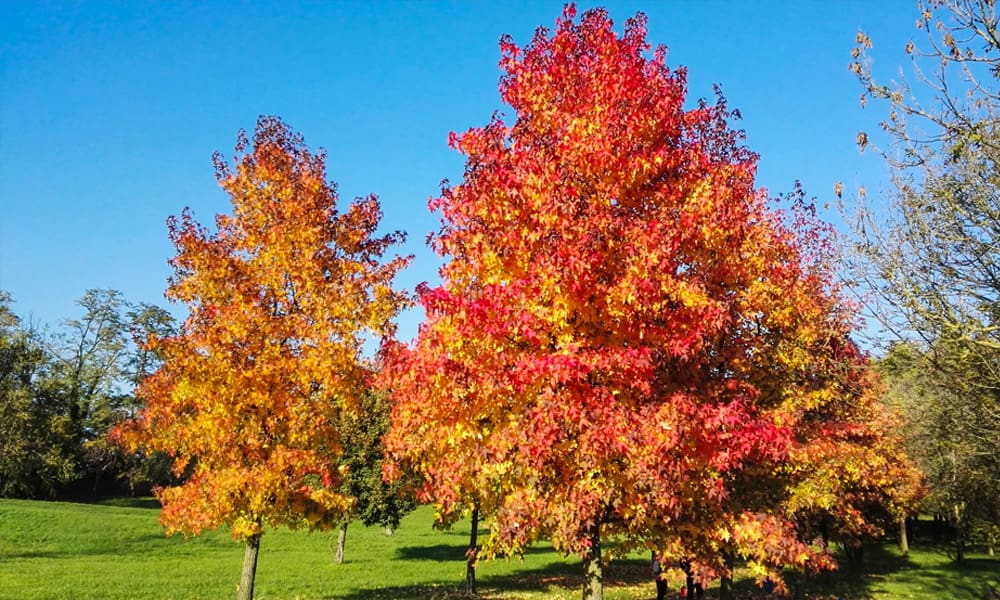
Liquidambar styraciflua
Often mistaken for a Maple due to its similarly lobed leaves, the Sweetgum produces one of the longest and most dramatic colour displays of any tree — often running through purple, red, orange and yellow simultaneously on the same tree. It’s a medium-size tree, so it suits larger gardens or estate plantings.
Best for: Full sun, moist fertile soil, and space to grow — it can reach 15-20m at maturity.
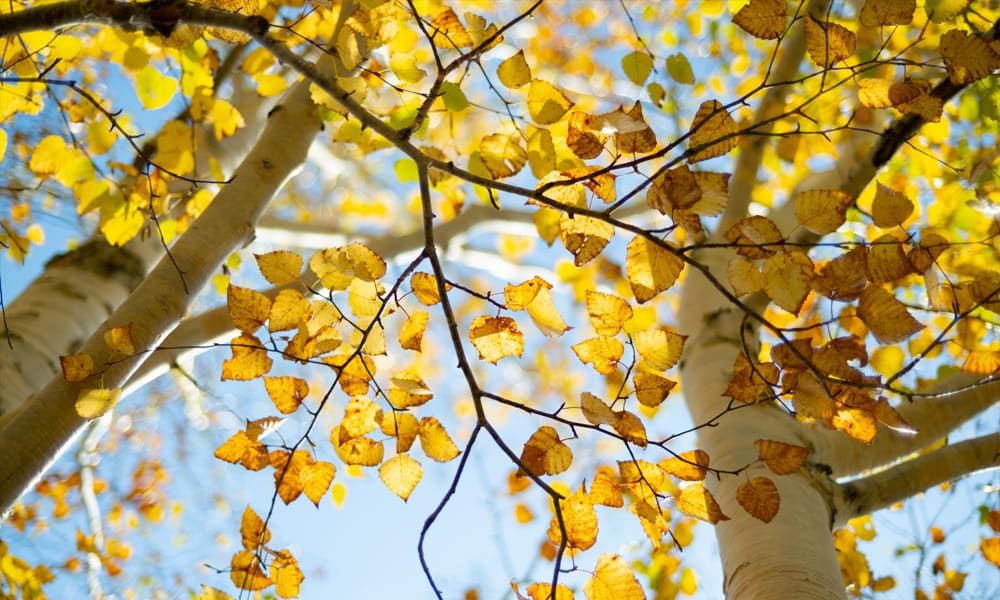
Betula pendula
Prized for its elegant white bark year-round, the Silver Birch leaf adds a soft, glowing yellow to the autumn garden. Its light canopy and slender form make it one of the most versatile trees for UK gardens. The Silver Birch is a large tree reaching 25-30m high at maturity, but there are many other small and medium-size varieties suitable for gardens of any size, and they all work beautifully underplanted with bulbs or ferns.
Best for: Almost any soil type, including poorer or drier ground; full sun to light shade.
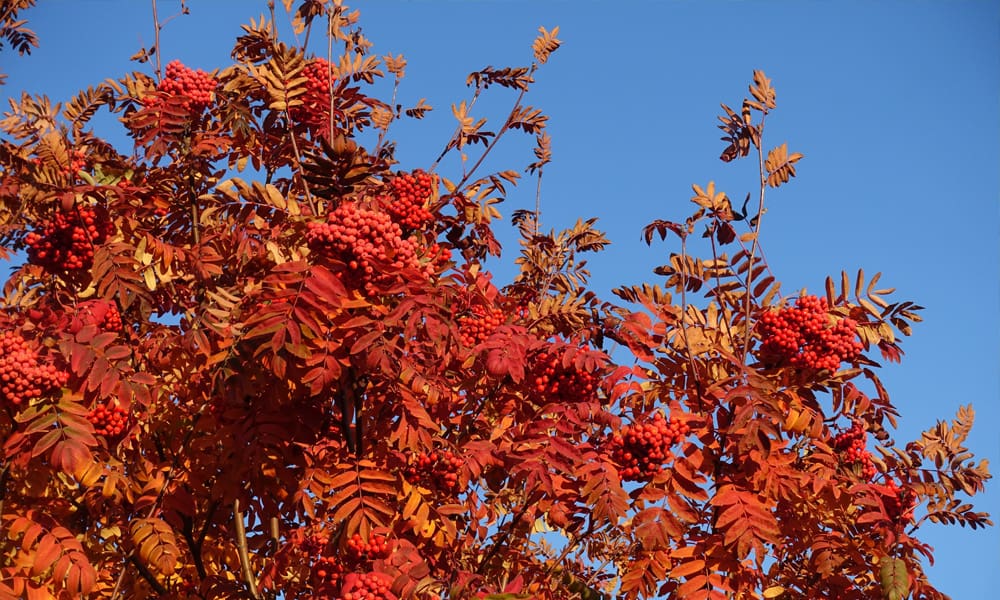
Sorbus aucuparia
Rowan offers a double display: clusters of orange-red berries alongside foliage that turns deep red and purple. It’s a wildlife favourite too, with berries that attract blackbirds and thrushes well into the
colder months, making it a strong choice for anyone building a wildlife-friendly garden.
Best for: Cool, moist, well-drained soil; tolerates exposed sites well. It can reach 10-15m tall.
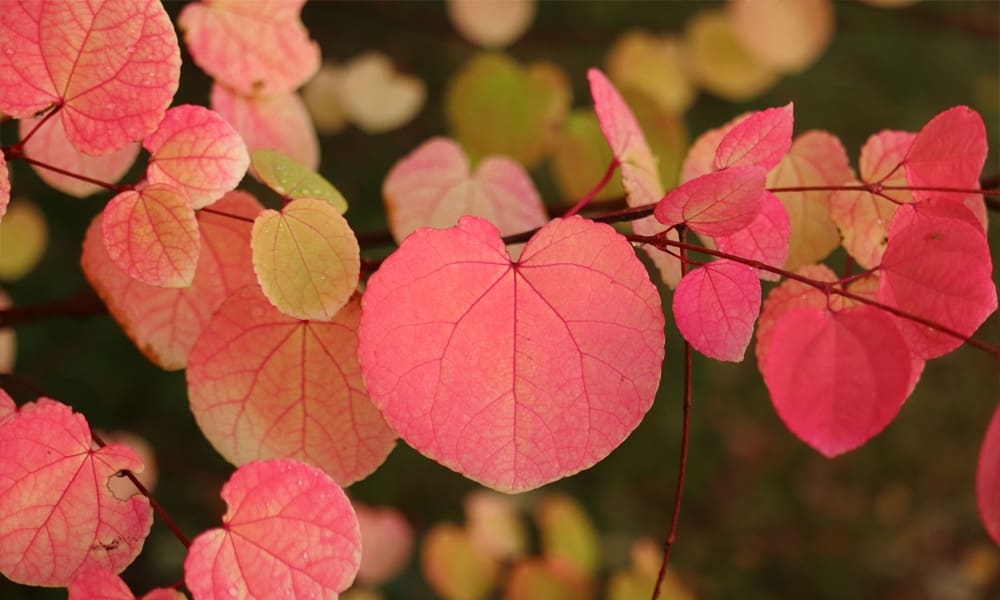
Cercidiphyllum japonicum
Beyond its glorious apricot-to-crimson autumn foliage, the Katsura has a secret weapon: as the leaves fall, they release a distinctive scent of burnt sugar or candyfloss that drifts across the garden on still autumn days. It’s a graceful, often multi-stemmed tree that deserves more attention in British gardens.
Best for: Sheltered, moist but well-drained soil, away from late frost pockets. 8-10m in maturity.
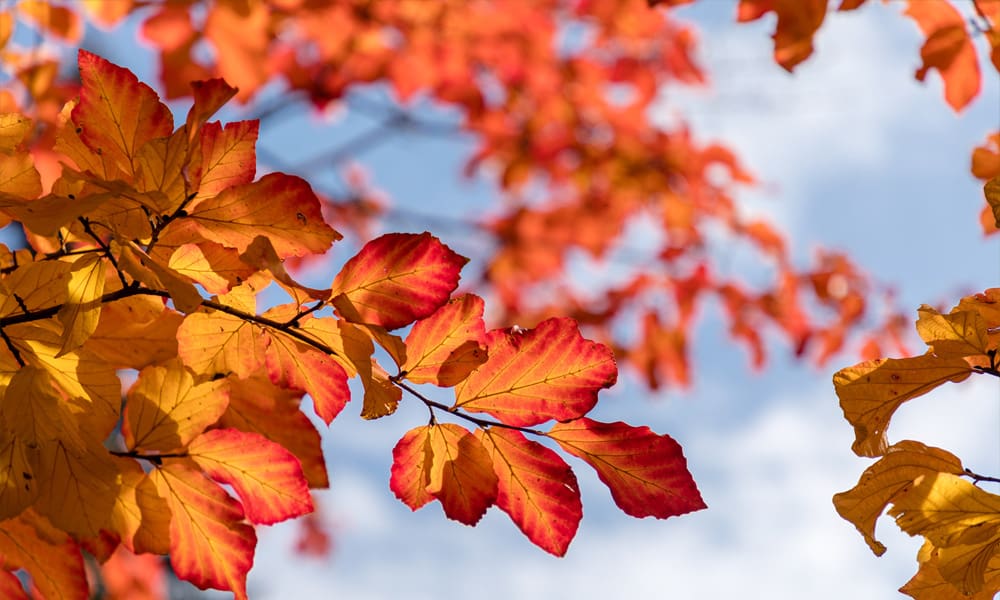
Parrotia persica
A slow-growing, wide-spreading tree that puts on one of the most reliable and long-lasting autumn shows available, with leaves that move through yellow, orange, deep red and purple in succession. Its flaking, patterned bark also provides excellent winter interest once the leaves have dropped. Parrotia trees are often wider, 8-10m than they are tall 5-7m.
Best for: Full sun to part shade, most well-drained soils; excellent as a specimen or lawn tree.
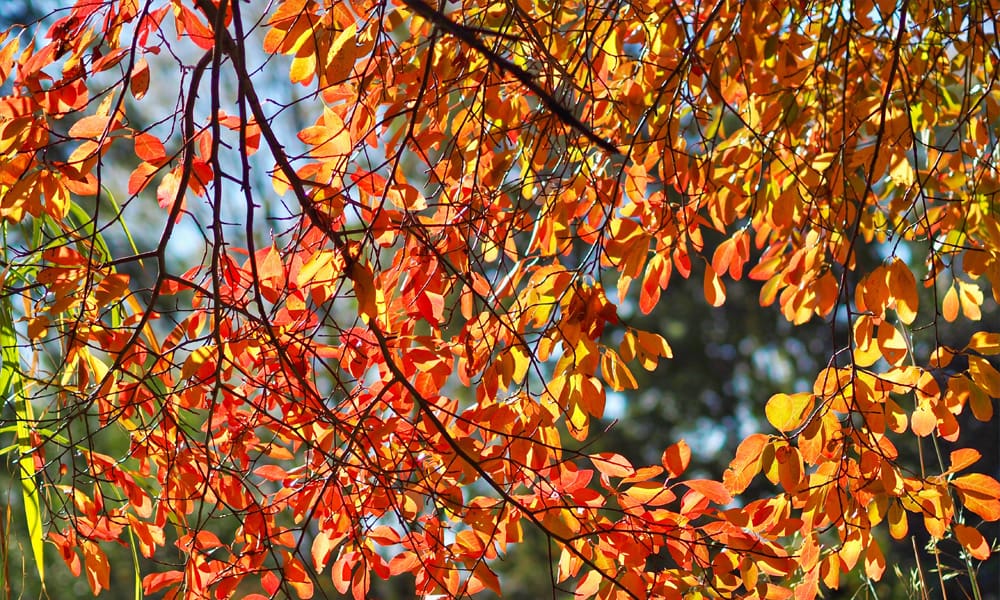
Nyssa sylvatica
Still relatively underused in the UK, the Tupelo is one of the most consistent performers for pure, glowing scarlet colour, regardless of soil pH. Its naturally elegant, layered branching habit gives it presence even before the leaves turn. When mature the Tupelo can reach 15-20m tall.
Best for: Moist, slightly acidic soil, though it adapts well once established.
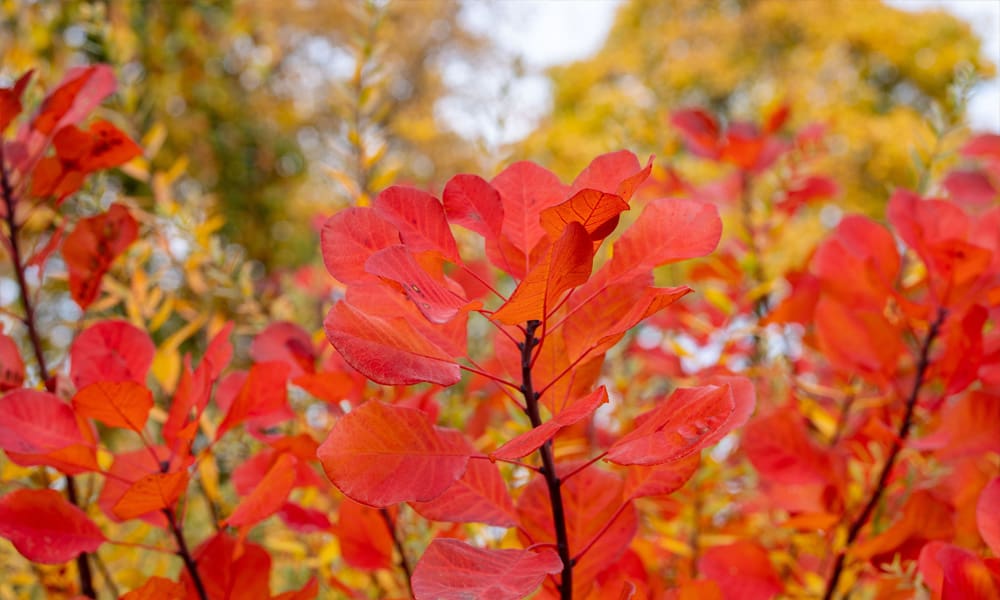
Cotinus coggygria
Technically a large shrub rather than a tree, reaching 3-5m wide and tall. Cotinus therefore deserves a mention for gardens where space is limited. Varieties like ‘Grace’ shift from plum-purple summer foliage to fiery orange-red in autumn, and the smoky seed plumes add texture through late summer.
Best for: Full sun and well-drained soil; thrives on poorer ground.
Planting Guide
A few principles apply regardless of which tree you choose:
Plant in autumn or early winter, while the soil is still workable and the tree can establish roots before spring growth begins.
Match the tree to your soil, particularly pH — acid-loving trees like Japanese Maples will struggle and discolour badly on chalky ground.
Give room to breathe. Larger specimens need space for their canopy and root system to develop properly; cramped conditions dull autumn colour considerably.
Consider the backdrop. Autumn colour reads best against an evergreen hedge, dark fencing, or open sky — plant with the wider garden composition in mind, not just the tree in isolation.
The best autumn-colour tree for your garden will depend on available space, soil conditions, aspect and the overall character of your landscape. At Hortlands, we source and plant mature and semi-mature trees for private gardens, estates and landscaping projects, helping clients select specimens that provide seasonal interest while complementing the wider planting scheme.
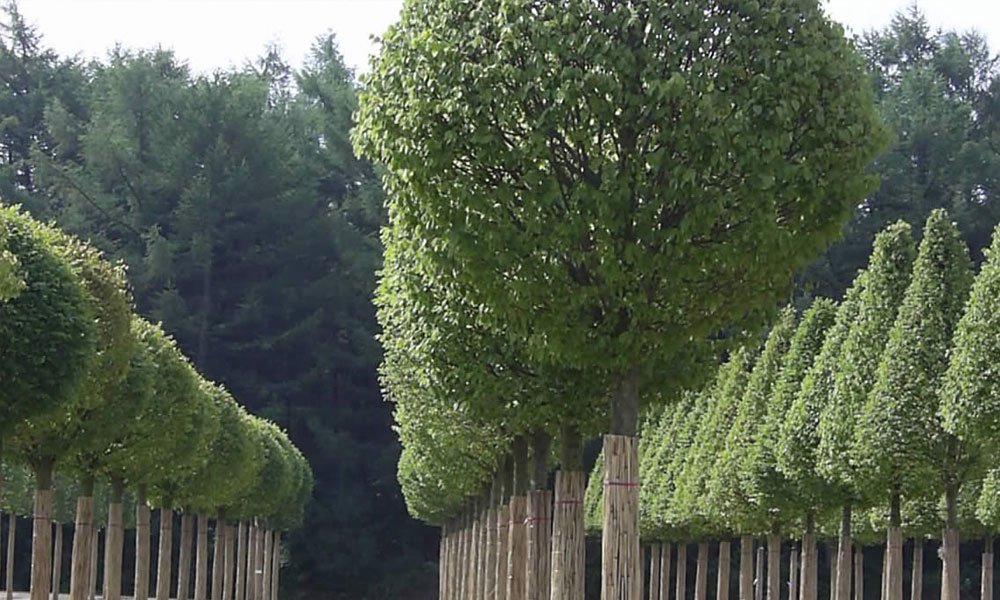
Source and plant mature and semi-mature trees to instantly add structure, character, privacy and seasonal interest to gardens, estates and commercial landscapes.
Hortlands mature trees →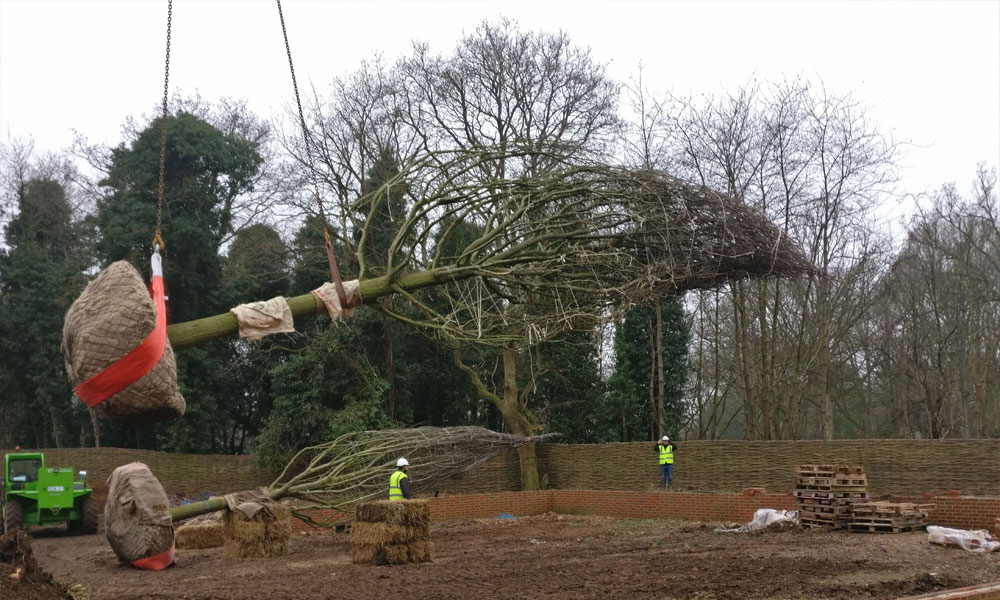
Expert tree sourcing, delivery and planting for private gardens, estates and commercial landscapes, with specialist knowledge of mature and semi-mature specimens.
Tree planting services →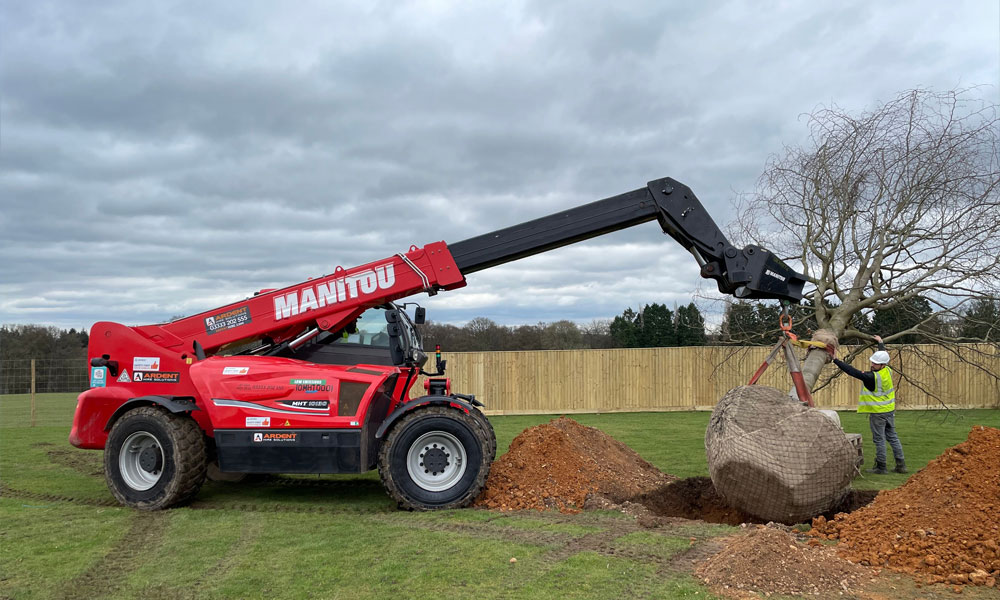
Explore Hortlands tree planting projects, from individual specimen trees and instant screening to large-scale planting schemes involving mature and semi-mature trees.
Tree planting case studies →Autumn Colour Trees FAQs
Japanese maple is particularly valued for its vivid red autumn foliage. Some varieties develop brilliant scarlet and crimson tones, making them excellent specimen trees for gardens where seasonal colour is a priority.
Sweetgum, Japanese maple, rowan and Persian ironwood can produce attractive combinations of red, orange, yellow and bronze foliage. Colour varies according to species, cultivar, growing conditions and the weather during autumn.
Autumn-colour trees are generally best planted during the dormant season, from late autumn through winter and into early spring, provided the ground is not frozen or waterlogged. Mature and semi-mature trees may require specialist preparation, handling and planting.
Large gardens and estates can accommodate species such as sweetgum, silver birch, tupelo and larger maples, depending on available space and soil conditions. Larger specimen trees can create dramatic seasonal focal points while contributing structure throughout the year.
For a small garden, choose a tree with an appropriate mature size and growth habit. Japanese maple is a popular option because it offers exceptional autumn colour while many cultivars remain relatively compact.
Yes. Hortlands specialises in sourcing, supplying and professionally planting mature and semi-mature trees for private gardens, estates and commercial landscapes. Our team can help select suitable specimens based on the site, available space, planting scheme and desired seasonal interest.
The best autumn gardens are rarely built around a single tree — they layer colour, from a fiery Maple in the foreground to golden Birch catching the low autumn light behind it. If you’re planning a new planting scheme or reworking an existing garden, autumn colour is worth designing for deliberately, not leaving to chance.
If you’d like advice on which trees would suit your garden’s soil, aspect and scale, our team would be glad to help you plan a planting scheme built to perform across every season.
Bring instant scale, structure and character to your garden with expertly sourced and planted mature trees.