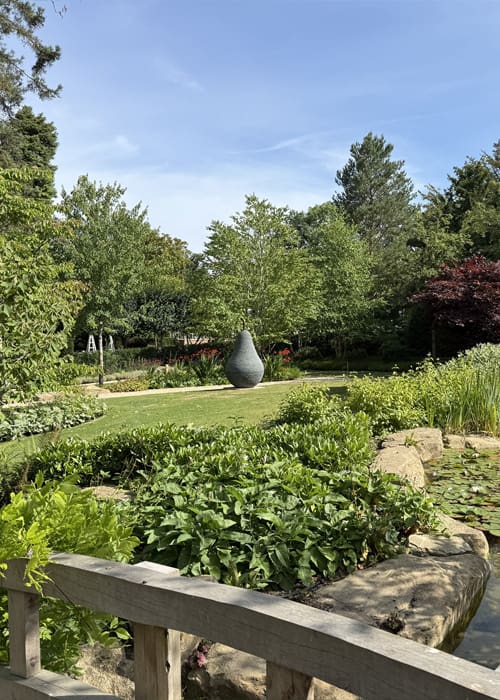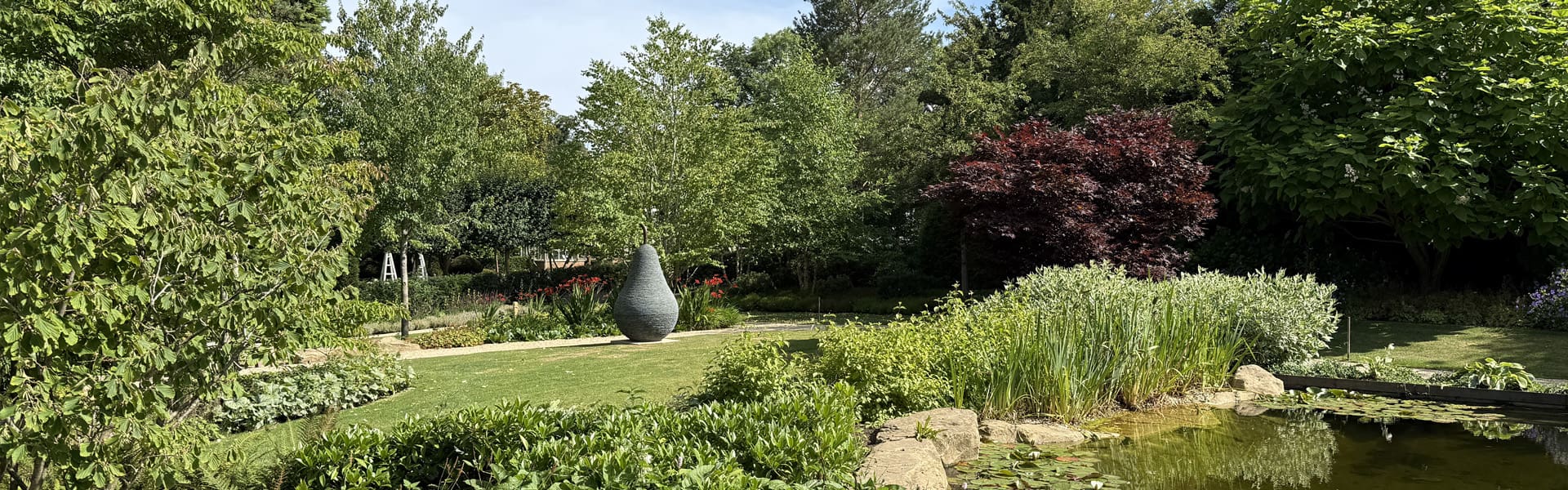
The right landscaping ideas can make a garden more attractive, practical and enjoyable throughout the year.
Planning your garden
At Hortlands, we create gardens across Buckinghamshire, Berkshire, Oxfordshire, Surrey, London and the surrounding Home Counties, combining hard landscaping, soft landscaping and planting to create gardens that work for each property and its owners.
One of the most important garden landscaping ideas is to establish a clear layout before choosing individual features. Think about how you want to use the garden and divide the space into practical areas. A well-planned layout can make a garden feel larger, improve movement through the space and create distinct areas without making the garden feel divided. Depending on the property, this could include:
A main lawn
Dining and entertaining areas
Outdoor seating
Planting borders
Vegetable or kitchen gardens
Children's play areas
Pathways and steps
Screening and privacy planting
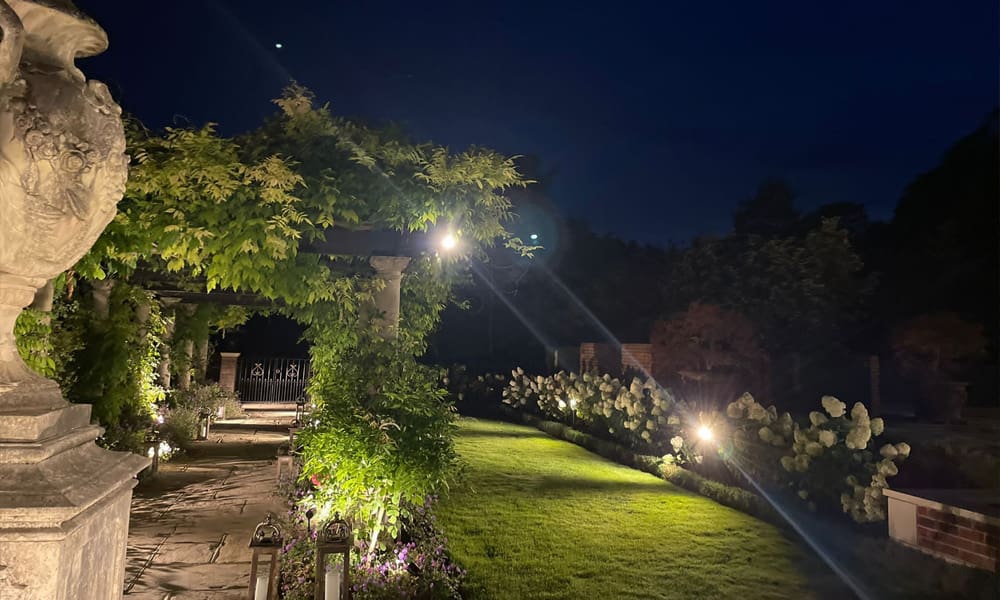
Good lighting can transform a landscaped garden after dark. Rather than simply illuminating the entire garden, use lighting selectively to highlight important features and improve movement through the space.
Ideas include:
A carefully designed lighting scheme can extend the use of the garden into the evening while creating atmosphere.
Garden planting combinations
A successful garden should look good throughout the seasons rather than relying on one period of flowering. Combine trees, shrubs, perennials, grasses and seasonal planting to create changing displays of colour, texture and form. Layering planting at different heights can also create greater depth and make borders feel fuller.
Consider including:
Spring-flowering trees and shrubs
Summer perennials
Ornamental grasses
Evergreen shrubs
Autumn-colour trees
Winter-flowering plants
Plants with interesting bark or stems
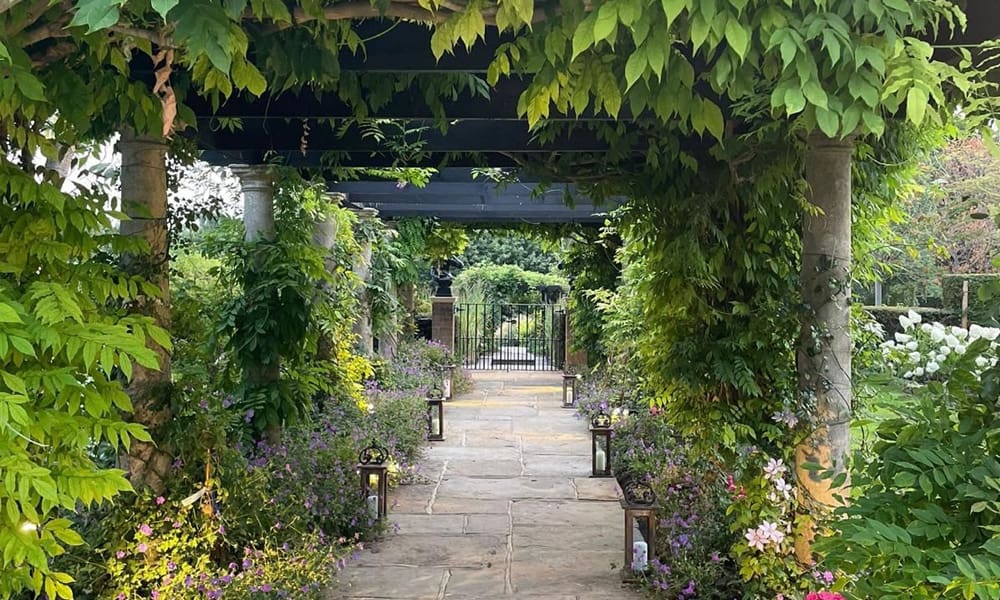
The most successful garden designs often balance hard and soft landscaping.
Hard landscaping provides the structure through features such as:
Soft landscaping introduces living elements such as:
Combining the two creates gardens that are both practical and visually cohesive.
Landscaping smaller gardens
Smaller gardens can still have ambitious landscaping designs. Avoid overcrowding the space. A smaller number of well-chosen features can often create a greater sense of quality and space.
Some effective ideas include:
Using strong lines and simple layouts
Creating one main focal point
Choosing multi-functional furniture
Using vertical planting
Introducing mirrors carefully
Planting trees with suitable mature dimensions
Keeping materials consistent
Creating a strong view towards the end of the garden
Before starting a landscaping project, consider how you want to use the garden, how much maintenance you are prepared to undertake and which features are most important to you.
It is also worth considering the garden’s aspect, soil conditions, drainage, existing trees, boundaries and relationship with the house.
A professional garden design can bring these elements together into one cohesive plan, helping ensure that materials, planting and landscaping features work together rather than being treated as separate additions.
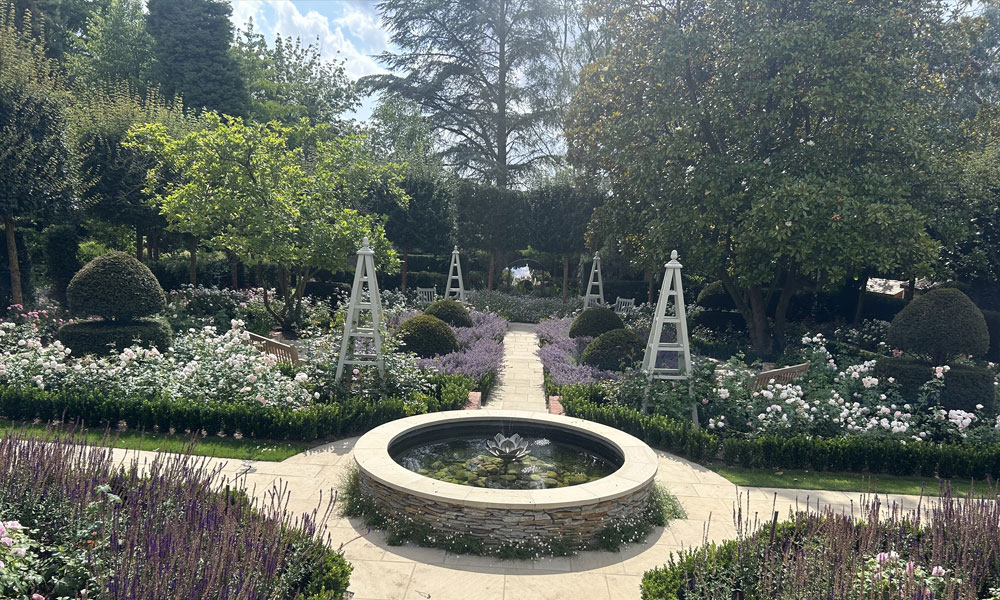
Large gardens can accommodate mature trees, extensive planting, formal lawns, long avenues, water features and multiple outdoor living areas.
View case study →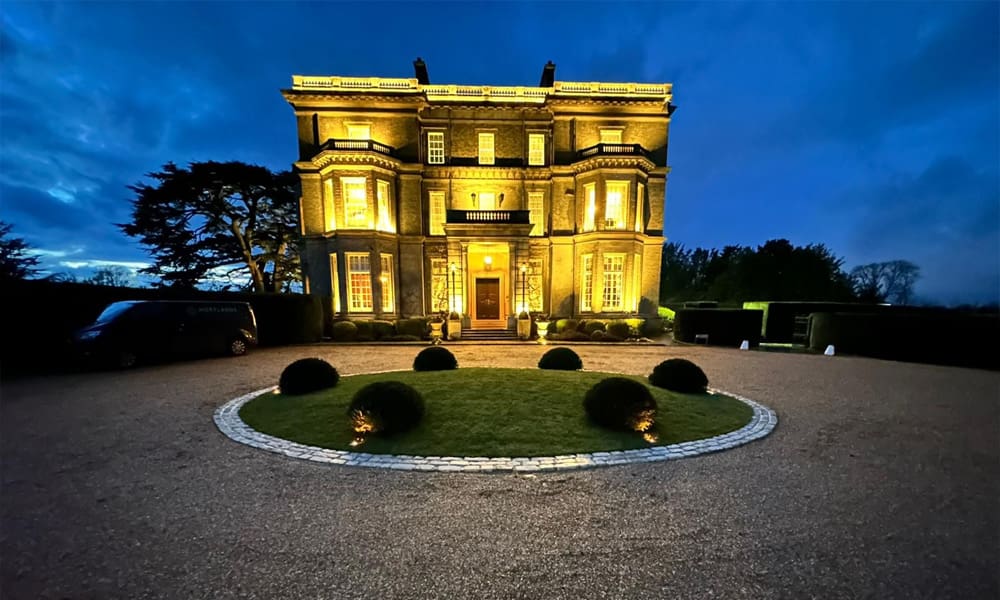
Traditional properties can be complemented by natural stone, established planting, hedges, mature trees and landscaping details that respect the character of the building.
View case study →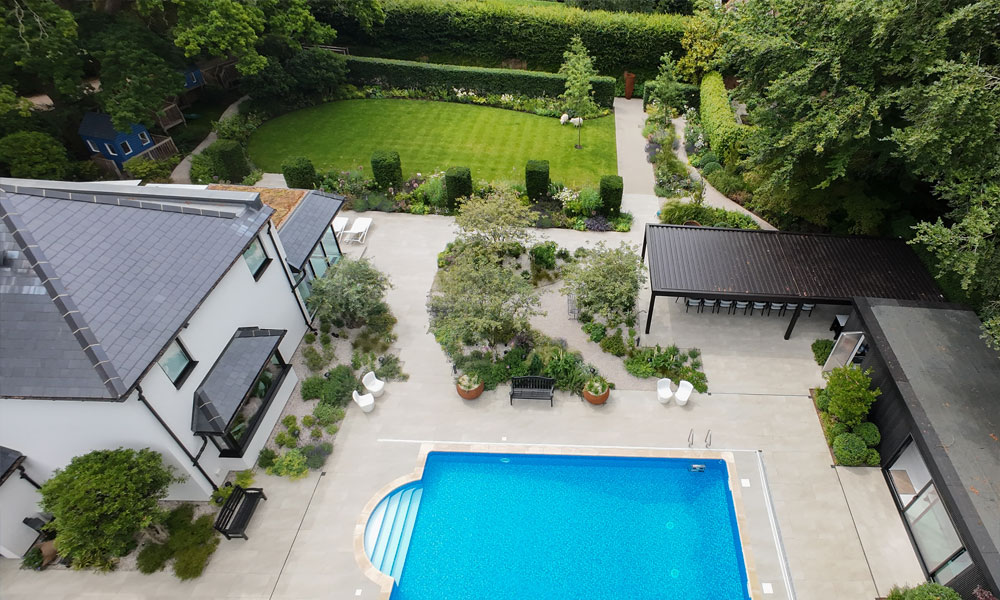
Contemporary gardens often benefit from clean lines, restrained planting, large-format paving, architectural plants and carefully integrated lighting.
View case study →Garden Landscaping FAQs
Popular ideas include new patios and terraces, mature tree planting, screening hedges, structured planting borders, garden lighting, water features, outdoor entertaining areas and automatic irrigation.
Start by considering how you want to use the garden, the areas you need and the style you prefer. A professional garden design can then bring the layout, materials, planting and features together.
Small gardens can benefit from simple layouts, vertical planting, carefully selected trees, built-in seating, screening and a limited palette of high-quality materials.
Trees, hedges, shrubs and pleached trees can all provide screening. The appropriate solution depends on the required height, available space and characteristics of the garden.
Yes. Mature and semi-mature trees can provide immediate structure, scale, shade, screening and seasonal interest when carefully selected and professionally planted.
It can. Soft landscaping may include trees, hedges, shrubs, perennials, grasses, lawns and seasonal planting, alongside hard landscaping features such as paving, walls and paths.
Yes. Irrigation can be incorporated into a garden landscaping project to provide controlled watering for lawns, borders, hedges, trees and other planting.
Maintenance requirements depend on the design, planting scheme, lawn areas and features included. A garden can be designed around the level of maintenance you are prepared to undertake.
Book a free, no-obligation site visit and quote with our landscaping team.