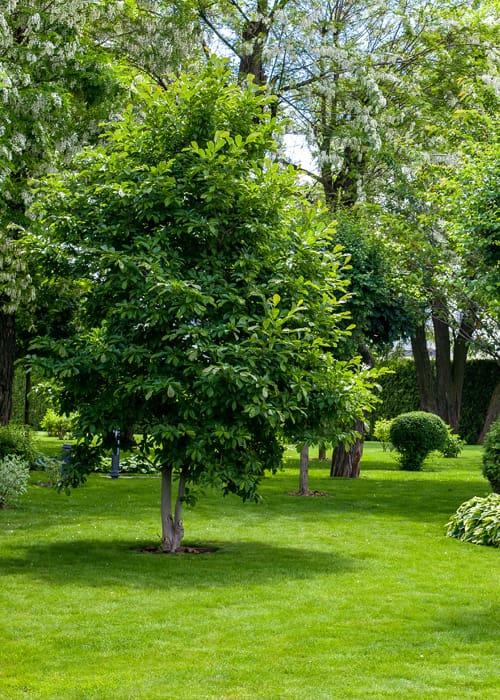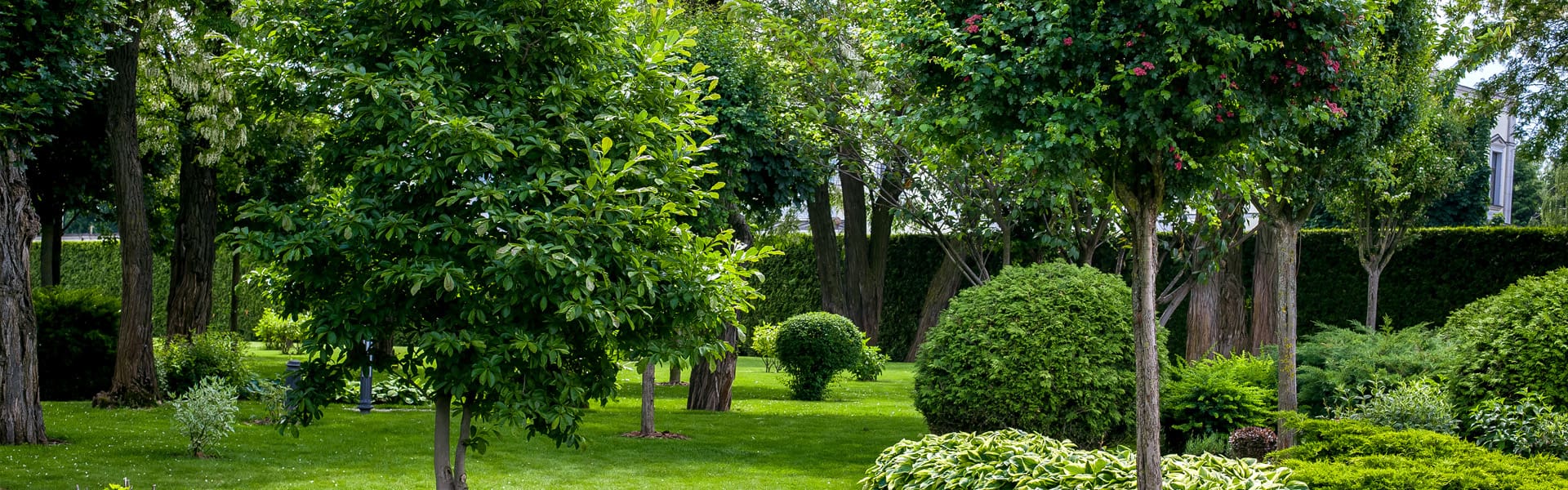
At Hortlands, we supply and plant trees in a wide range of sizes, from smaller container-grown trees through to large semi-mature and mature specimens.
Hortlands Tree Size Guide
Choosing the right tree size is an important part of planning a successful garden landscape. Whether you are looking for a young tree to establish naturally over time or a mature specimen tree to create an immediate impact, selecting the appropriate size can make a significant difference to the finished garden.
The right choice will depend on your available space, planting location, desired appearance and how quickly you want the tree to make an impact.
#1 Small
Approximately 1.5–2.5m
Small gardens, borders and courtyards.
#2 Medium
Approximately 2–4m
Residential gardens and general landscaping.
#3 Semi-mature
Larger trunk girth and established crown
Screening, focal points and high-quality landscapes.
#4 Mature
Large established specimen
Estates, avenues, developments and major landscapes.
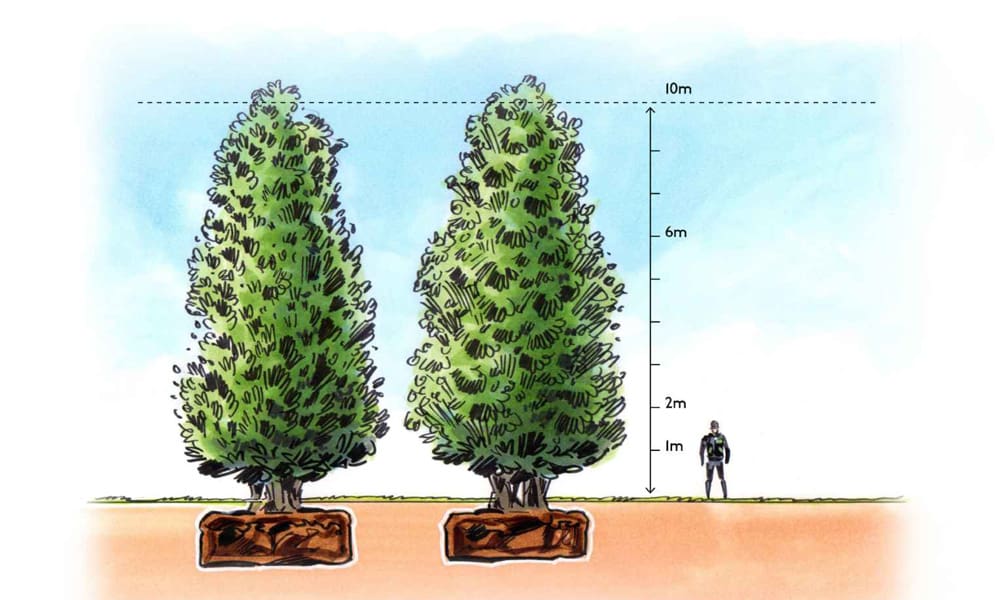
Tree sizes are generally described by their height, trunk girth or both. When buying trees, it is important to understand these measurements because a tree described as a “large tree” can mean different things depending on the supplier.
Tree size is commonly specified using:
For larger specimen trees, trunk girth can provide a more useful indication of maturity than height alone.
Smaller trees are often suitable for gardens where space is limited or where a more gradual increase in size is preferred.
Typical smaller tree sizes may include specimens around 1.5m to 2.5m tall, although the eventual size will depend on the species and variety.
Smaller trees can be particularly useful for:
Choosing a smaller tree also allows you to watch it establish and develop naturally over the years.
Medium-sized trees provide a useful compromise between cost, establishment and immediate visual impact.
Depending on the species, these trees may be supplied at approximately 2m to 4m in height, with larger trunk girths available for specimen-quality trees.
They can be used to provide garden structure, screening, shade, seasonal interest, height within borders, focal points and privacy from neighbouring properties.
Medium-sized trees are often appropriate for established residential gardens where there is sufficient space for the tree to develop.
Semi-mature trees are larger specimens that have already developed substantial trunks, branches and crowns.
They can provide considerably more immediate impact than younger trees and are particularly popular for high-quality landscaping projects, large private gardens and commercial developments.
Semi-mature trees can be used to:
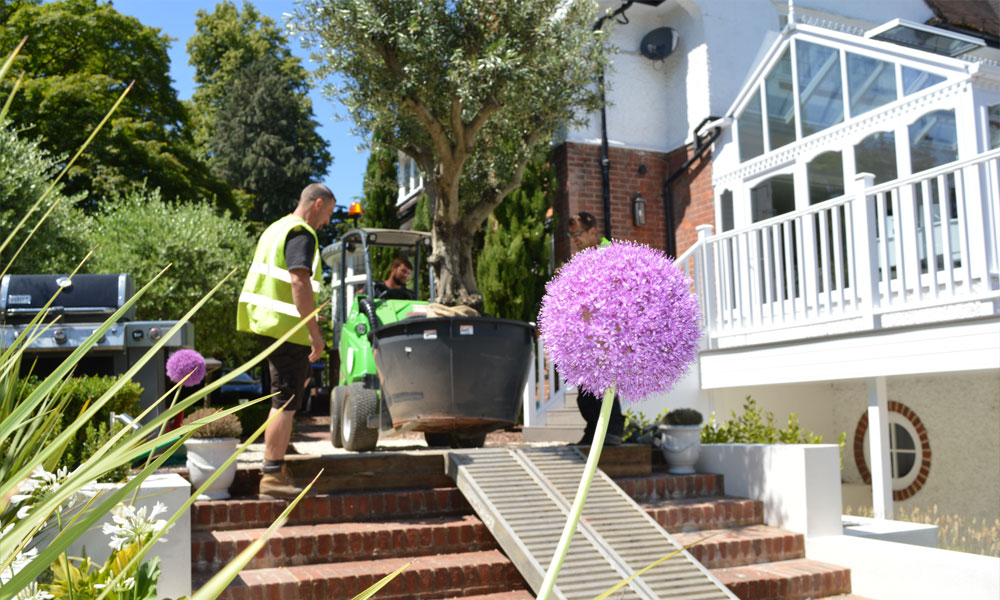
Because larger trees require careful handling, transportation and planting, specialist equipment and expertise may be required depending on their size and location.
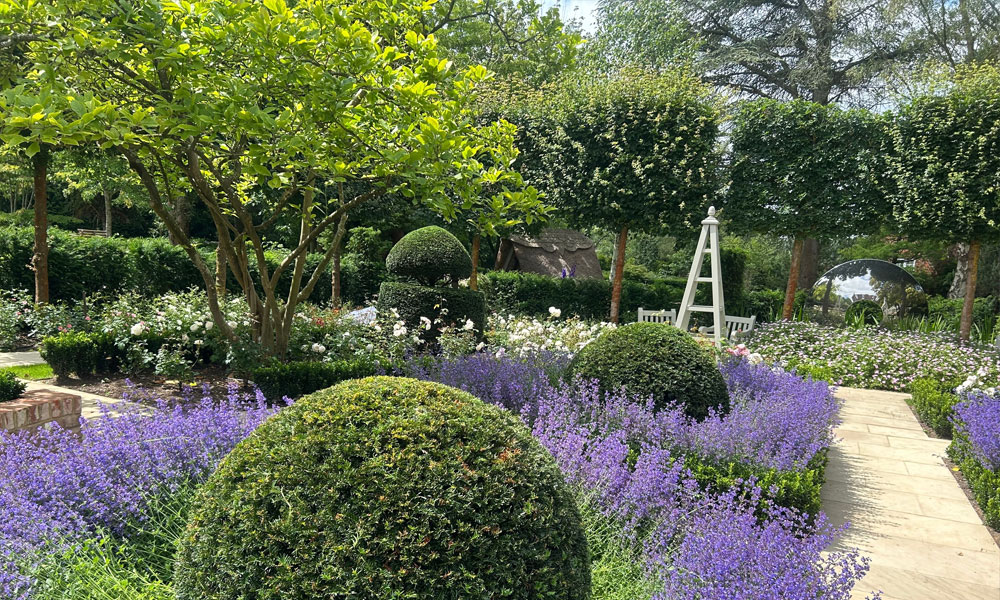
Large mature trees can transform a landscape almost immediately. They are often selected when the finished garden needs to look established from the outset.
Large specimen trees may include substantial trees several metres tall with significant trunk girth and extensive rootballs.
They can be particularly effective for large private estates, new-build developments, formal avenues, estate entrances, commercial landscapes, screening projects, large garden designs and creating dramatic focal points.
The logistics involved in supplying and planting very large trees can be considerable. Access, lifting requirements, rootball weight, underground services and planting conditions all need to be assessed before installation.
Tree choice considerations
The mature dimensions of the species are more important than the tree’s size when it is planted. A tree that looks appropriately sized when newly planted may eventually become too large for its location if its mature dimensions have not been considered.
Before selecting a tree, consider:
Its eventual height
Mature canopy spread
Rooting characteristics
Distance from buildings
Proximity to boundaries
Overhead services
Underground utilities
Existing trees and planting
Available sunlight
Soil conditions
Access for planting and maintenance
Budget
Tree Size FAQ
Hortlands specialises in supplying and planting mature and semi-mature trees for private gardens, estates and landscaping projects.
Our experience includes projects involving substantial specimen trees, specialist lifting equipment and complex planting logistics. We can help with selecting suitable trees for the site, coordinating delivery and carrying out professional planting.
Whether you are looking for a small ornamental tree or a substantial mature specimen, choosing the correct size is an important part of creating a successful long-term landscape.
A smaller tree is often easier to accommodate in a compact garden, but the mature height and spread of the species should always be considered. Some naturally compact species can provide attractive structure without taking over the available space.
There is no single definition of a mature tree size. Mature specimens vary considerably according to species, age and growing conditions. Suppliers may describe larger trees using both overall height and trunk girth.
Generally, larger trees require more resources to transport, handle and plant. Depending on their size, specialist lifting equipment may also be required.
Yes, provided the site is suitable and there is sufficient access for delivery and planting. A site assessment can identify access restrictions, planting conditions and lifting requirements before the tree is selected.
The most suitable size depends on the project. Smaller trees can establish and develop over time, while mature and semi-mature trees provide a more immediate landscape impact.
Yes. Hortlands can source and plant mature and semi-mature trees for private gardens, estates and landscaping projects, with the tree size selected according to the site and design requirements.
Bring instant scale, structure and character to your garden with expertly sourced and planted mature trees.